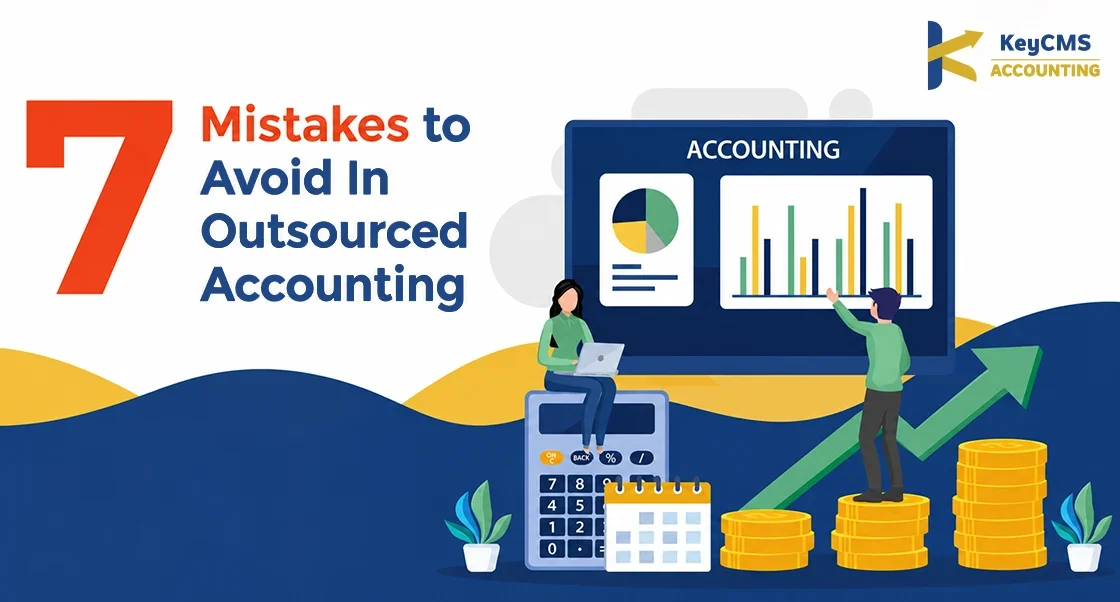
The use of outsourced accounting is an effective strategy for businesses and CPA Firms to cut costs and drive efficiencies, enabling them to concentrate on growth opportunities. Through collaboration with external accounting partners, companies can attain professional financial management without the overhead of an extensive internal team.
That being said, outsourcing accounting is not simply shifting financial responsibilities to an outside party. If done poorly, it can create communication problems, compliance challenges, and mistakes in the financial records.
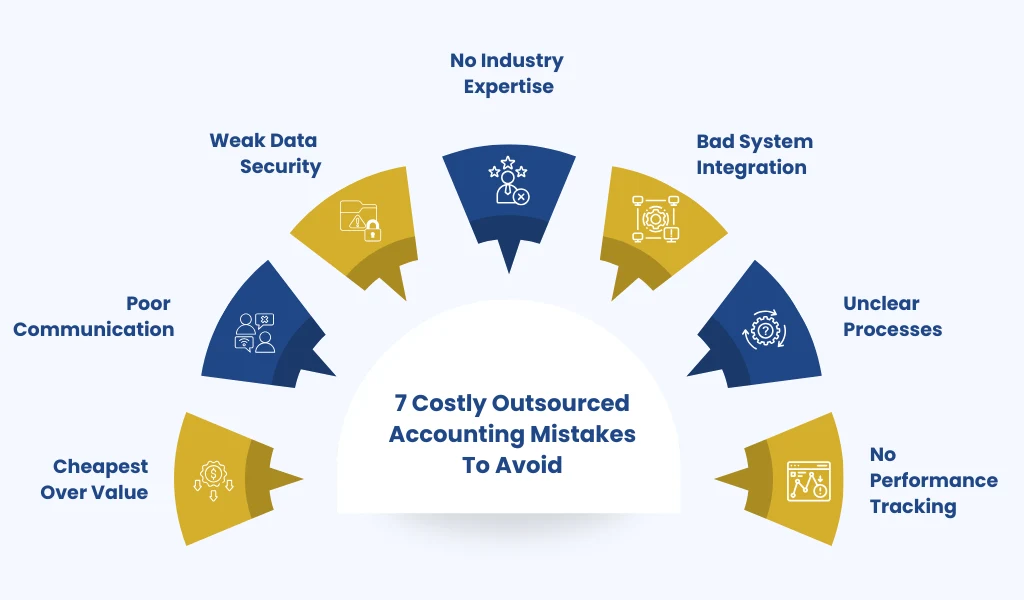
This guide examines the seven most common mistakes made by businesses when Outsourcing Accounting and will provide opportunities to mitigate those mistakes to assure an effective outsourcing partnership.
7 Costly Outsourced Accounting Mistakes to Avoid
1. Choosing the Cheapest Provider Instead of the Best Value
One of the biggest mistakes businesses make is selecting an outsourcing provider solely based on price.
Low-cost services may seem attractive, but they can sometimes compromise quality, security, or expertise.
Instead of focusing only on cost, evaluate:
- Industry experience
- Data security standards
- Accounting certifications
- Technology and tools used
- Client testimonials
A reliable outsourcing partner should deliver accuracy, compliance, and strategic financial insights, not just low prices.
2. Lack of Clear Communication
Communication gaps are a common issue in outsourced accounting relationships.
Without clear expectations, businesses may face:
- Delayed financial reports
- Misunderstood instructions
- Incomplete documentation
To avoid this problem:
- Establish regular communication schedules
- Use project management or accounting collaboration tools
- Define reporting timelines
Clear communication ensures both teams remain aligned with financial goals.
3. Ignoring Data Security and Confidentiality
Accounting involves highly sensitive financial data. Ignoring cybersecurity measures when outsourcing accounting can expose businesses to serious risks.
Before choosing an outsourcing partner, confirm they follow:
- Secure data encryption
- Access control policies
- Confidentiality agreements
- Cloud security standards
Protecting financial information should always be a top priority.
4. Not Checking Industry Expertise
Every industry has unique accounting requirements. For example, accounting for construction, eCommerce, Healthcare, and real estate can involve different regulations and reporting standards.
Businesses often make the mistake of hiring a generic accounting service without verifying industry expertise.
Choosing an outsourcing partner familiar with your industry ensures:
- Accurate financial reporting
- Proper tax compliance
- Better financial insights
5. Poor Integration with Existing Accounting Systems
Many companies already use accounting tools such as cloud-based platforms or ERP systems.
A common mistake is Outsourcing Accounting without ensuring compatibility with existing systems.
Before outsourcing, confirm that your partner is experienced with:
- Cloud accounting platforms
- Financial automation tools
- Data integration systems
Proper integration improves efficiency and eliminates manual errors.
6. Lack of Defined Processes and Responsibilities
Some businesses assume the outsourcing provider will manage everything automatically.
Without clearly defined roles and processes, this can lead to confusion about responsibilities such as:
- Who handles tax preparation
- Who manages financial reports
- Who communicates with auditors
Setting clear workflows ensures accountability and smooth operations.
7. Not Monitoring Performance
Outsourcing accounting does not mean losing visibility into financial processes.
Businesses sometimes fail to review the performance of their outsourcing partner regularly.
To maintain control, companies should:
- Track key financial metrics
- Review financial reports frequently
- Schedule periodic performance evaluations
Regular monitoring ensures the outsourcing partnership continues to deliver value.
How to Successfully Manage Outsourced Accounting
To maximize the benefits of outsourced accounting, businesses should:
- Choose an experienced outsourcing partner
- Maintain transparent communication
- Ensure strong data security practices
- Monitor financial performance regularly
A well-managed outsourcing partnership can help businesses achieve cost efficiency, financial accuracy, and scalable growth.
Conclusion
Outsourcing accounting can be a game-changer for businesses and CPA firms, offering cost savings, efficiency, and access to expert financial management. However, avoiding common mistakes is key to ensuring a smooth and successful partnership. By choosing the right provider, maintaining clear communication, safeguarding sensitive data, verifying industry expertise, integrating systems properly, defining responsibilities, and monitoring performance, you can maximize the benefits of outsourced accounting.
A well-managed outsourcing relationship doesn’t just handle your Bookkeeping it drives accuracy, compliance, and long-term business growth.
FAQs
1. What is outsourced accounting?
Outsourced accounting is hiring an external firm or professionals to manage financial tasks like bookkeeping, Payroll, tax filing, and financial reporting for your business.
2. Why do businesses outsource accounting services?
Businesses outsource accounting to reduce costs, access specialized expertise, improve accuracy, and focus on their core operations.
3. How do I choose the right outsourced accounting partner?
Look for industry experience, certifications, technology capabilities, strong data security, and positive client reviews to ensure a reliable partnership.
4. Is outsourced accounting safe for sensitive financial data?
Yes, if your provider follows strict data security protocols, encryption, and confidentiality agreements, outsourced Accounting can be highly secure.
5. Can outsourced accounting work for CPA firms?
Absolutely. CPA firms often Outsource Bookkeeping and financial reporting to improve efficiency, handle tax season workloads, and scale their services.
6. What are the common risks of outsourcing accounting?
Common risks include poor communication, lack of industry expertise, data security issues, unclear responsibilities, and inadequate monitoring of performance.
7. How can businesses maximize the benefits of outsourced accounting?
To get the most value, choose the right partner, maintain transparent communication, ensure proper system integration, monitor performance regularly, and clearly define roles and responsibilities.