
Beginning an enterprise encompasses many duties controlling processes, locating clients, developing services, and managing money. One fundamental yet frequently disregarded responsibility is bookkeeping.
Numerous start-ups face challenges with financial record-keeping in their initial stages. This brings us to the question:
Is it more feasible for a start-up to Outsource Bookkeeping Services, or can it be done properly in-house?
The ensuing article will discuss the advantages, difficulties, and situations in which Outsourcing Bookkeeping becomes more feasible for developing companies.
What is Bookkeeping?
The process of documenting, classifying, and keeping track of the financial transactions of a business is called bookkeeping.
This process usually entails the following:
- Recording cash inflows and outflows
- Managing both accounts receivable and accounts payable
- Performing reconciliations of bank and credit card accounts
- Tracking payroll
- Preparing formal financial statements
Startups that have accurate bookkeeping are better positioned to evaluate their cash flow, the profitability of their business, and the overall financial condition of their business.
Why Bookkeeping Is Critical for Start-Ups
Many entrepreneurs concentrate on sales and product development while neglecting financial documentation. Bookkeeping neglect can potentially lead to:
- Cash flow issues
- Errors in tax filings
- Mismanagement of finances
- Difficulty in securing investors
Start-ups gain a number of advantages with proper bookkeeping, including:
- The ability to make informed financial decisions
- The ability to monitor the growth of the business
- The ability to stay compliant with tax legislation
- The ability to prepare precise financial statements
What Does Outsourcing Bookkeeping Mean?
To outsource bookkeeping is to contract an outside accounting professional or firm to organize your records rather than doing it in-house.
Many startups Outsource Bookkeeping to professional accountants who work with cloud accounting software like QuickBooks or Xero.
Benefits of Outsourcing Bookkeeping for Start-Ups
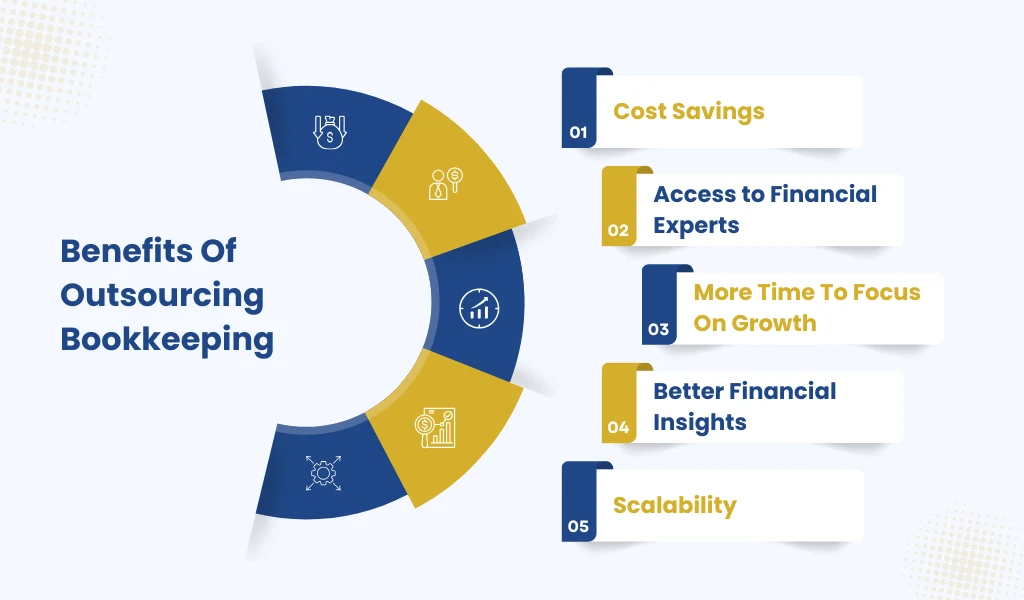
Cost Savings
Hiring a full-time accountant can be expensive for a start-up. You will only pay for what you need while eliminating the costs of payroll and training.
Access to Financial Experts
Fewer mistakes will be made, and precision will be improved as Bookkeeping Firms will have hired professional accountants and better understanding and experience with reporting, compliance, and tax law.
More Time to Focus on Growth
Outsourcing bookkeeping will enable start-up founders, who can get swamped with responsibilities, to shift their attention to building the business and not the spreadsheets.
Better Financial Insights
Bookkeeping services that remain outsourced will oftentimes give you clearer and better financial insights through higher quality and more detailed reporting. Startups will then be able to make better decisions as to how to run the business.
Scalability
Outsourced bookkeeping is the only option that will scale on its own when the transactions of the start-up increase as it expands. You will not have to hire more people to get it to scale.
When Should a Start-Up Outsource Bookkeeping?
Outsourcing bookkeeping can be beneficial when:
- You are spending a considerable amount of time on recordkeeping.
- Your transaction volume is increasing.
- Your investors need precise financial documentation.
- Your tax obligations are becoming more complicated.
To prevent costly errors, many start-ups begin outsourcing bookkeeping services within the first year of business.
When Keeping Bookkeeping In-House Might Work
Specialized bookkeeping support becomes necessary as the business increases in size. An early-stage startup might keep bookkeeping in-house if:
- The company’s business transactions are minimal.
- The founder possesses knowledge of bookkeeping and accounting.
- There are financial constraints.
Is Outsourced Bookkeeping Safe?
Outsourcing bookkeeping is safe with accounting firms that use reputable cloud accounting systems and have solid data protection procedures.
Globally, numerous businesses depend on outsourced bookkeeping for the effective management of their financial processes.
Conclusion
From a financial and strategic standpoint, outsourcing bookkeeping is a wise option for startups, as it enables access to a professional financial team, increases focus on core competencies, and is likely to increase cost efficiency.
Startup founders should focus their time on activities other than recording history and managing accounts, and this can be achieved through the use of professional Bookkeeping Services.
FAQs
1. Why is outsourcing bookkeeping beneficial for start-ups?
Outsourcing bookkeeping is beneficial for start-ups to free up time, minimize costs, and capture their bookkeeping accurately. With bookkeeping services, business owners have the time to focus on growing the business while bookkeepers take care of the day-to-day financial record keeping, reporting to the owners, and keeping them compliant with the law.
2. Is bookkeeping outsourcing viable for small businesses?
Yes, bookkeeping outsourcing is more viable than getting a full-time accountant. Startups only need to pay for the services required and avoid the costs of salaries, benefits, and training.
3. What outsourcing is available for bookkeeping?
There is a variety to choose from. Start-ups can outsource bookkeeping services like maintaining transaction records, making and receiving payments, reporting financial statements, and providing assistance to the owners with taxes.
4. What is the right time for startups to outsource bookkeeping?
When the volume of bookkeeping for financial activities is high, when the tax compliance is not straightforward or when the owner is getting tied up with bookkeeping and not concentrating on growing the business.
5. How safe is outsourcing bookkeeping?
Outsourcing bookkeeping is safe to do if you are dealing with a professional accounting firm that uses highly protected and secure accounting software for bookkeeping and is adherent to data safekeeping.
6. Is it possible to improve financial decisions by outsourcing bookkeeping?
Certainly. Outsourced bookkeeping services equip start-ups with detailed financial reports such as profit/loss reports, balance sheets, and cash flow statements, which guide financial decision-making.
7. What should start-ups consider when selecting a bookkeeping service provider?
For Bookkeeping Services, start-ups should consider industry experience, familiarity with accounting software, good security practices, transparent pricing, and the capacity to grow services with the business.