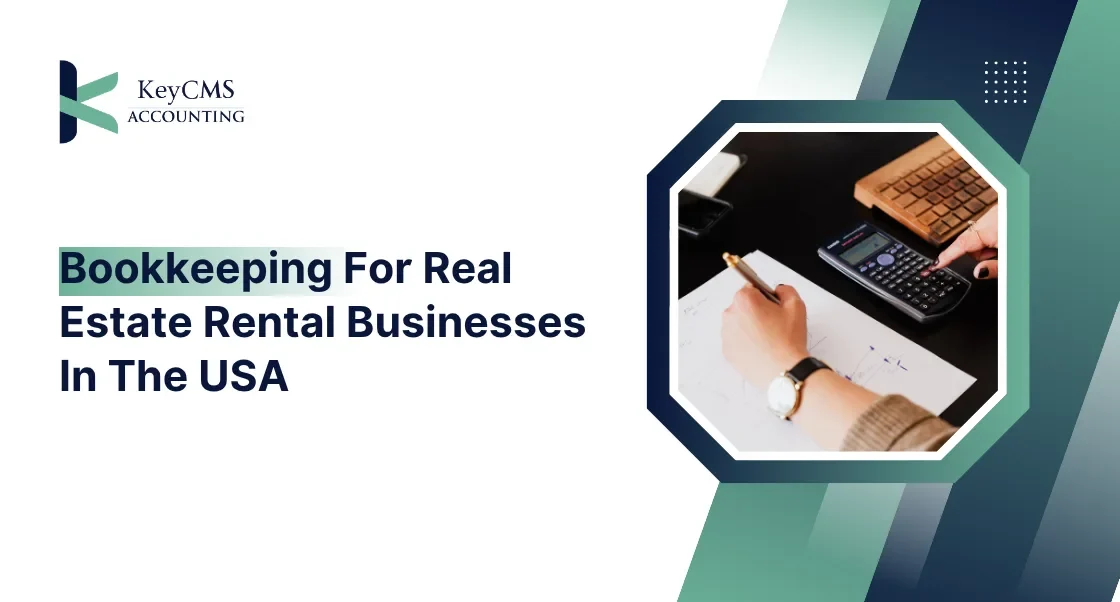
Starting and managing a real estate rental business can be quite rewarding. However, managing the finances can be quite overwhelming. One of the primary steps is bookkeeping. This step is vital so you can track your income, expenses, and liabilities while also remaining compliant with USA tax laws. Good Bookkeeping, or Real Estate Bookkeeping Services, will also assist you financially in the future and help you make solid future business decisions.
In this blog, we will explore the best ways to manage your Bookkeeping in Real Estate Rental Business. We will discuss the steps necessary to set up your chart of accounts and tax report to help you manage your financial system efficiently.
Setting Up a Chart of Accounts (COA) for Rental Properties
A COA is fundamental to your bookkeeping. COA is a list of all the accounts that will be used to record all the transactions for your rental properties. COA helps you structure accounts that track the rental income, expenses, and other activities of the business.
When setting up a COA for a real estate rental business, you have to include certain categories such as:
Revenue: Money received from renting to tenants, parking, laundry, etc.
Financial Resources: Value of the properties, tangible assets, and the security deposits collected.
Obligations: Mortgages, bills, loans, and liabilities concerning the security deposits.
Outflows: Maintenance, insurance, utilities, and fees for the management of the property and advertising.
Equity: Money put in and taken out of the property by the owner.
Depreciation: Reduction in the value of real estate assets as time goes by.
Putting in place this financial system from the beginning will help give you an accurate, consistent, and organized financial report.
Recording Rental Income: Accrual vs Cash Basis
In real estate, there are two ways to record rental income, which are accrual and cash basis. The method you select will impact your financial statements and Taxes.
- Accrual Basis: This method considers rental income to be “earned” under the lease agreement/service provided, regardless of whether cash has been received or not. Usually this method is used by bigger companies, and it is mandatory for companies that have inventory.
- Cash Basis: With this method, income is recorded only after money has been received. This method is generally easier and is preferred by small landlords or managing a few properties.
The right choice for your business size and tax planning strategy will make a difference. For most small businesses or landlords, cash basis is preferred because of the straightforwardness.
Properly Recording Security Deposits and Liabilities
Security deposits are intended to cover potential damages to the rental property. For landlords, they are considered a liability, since the money must be returned or the customer is free to sue. For the landlord, they are not considered income unless the customer forfeits the deposit.
For accounting purposes, do the following:
When received: Record the deposit as a liability (not income). Set up an account in the liability section called “Tenant Security Deposits.”
When used: If the deposit is used because of tenant damage, you can charge the deposit to the appropriate expense account (e.g., “Repair & Maintenance”).
Refunding deposits: When the tenant moves out, you must refund the deposit. This decreases the liability balance.
Depreciation Adjustments for Real Estate Assets
Real estate investments are subject to appreciation. In the USA, they can be appreciated for tax purposes to lessen rental income. It may also reduce your tax liability by using the tax-depreciation benefits.
To determine tax depreciation on rental properties, do the following:
- Establish the cost basis of the rental property. The cost basis refers to the total amount that the rental property cost you, which includes everything you paid for the property, including acquisition costs and closing costs, but does not include the price of the land, because land cannot be depreciated.
- Determine the correct method of depreciation. The IRS considers real estate investments to fall under the Modified Accelerated Cost Recovery System (MACRS), and for residential rental properties, the depreciation period is typically 27.5 years.
- Consider expenses for improvements. If you added a new roof or upgraded the kitchen, those need to be depreciated separately from the building. Each of those depreciable assets will have their own pole life.
Differentiating Expenses vs Capital Improvements
It is crucial to understand operating costs from capital enhancements in real estate bookkeeping:
Costs: These are the everyday costs involved in running the property, and in real estate this includes costs like maintenance and repairs, property management, utility payments, and other everyday running costs of the property. These can usually be written off in the year that they happen.
Enhancements: Additions that improve the property to make it more valuable are known as enhancements and examples are building a new bathroom or remodeling the kitchen. Enhancements always get depreciated over time rather than getting written off in the year they happen.
Getting the costs and enhancements distinctions right not only makes the Outsource Bookkeeping more accurate, but keeps the business within tax compliance.
Reconciling Transactions with Property Management Software
Software for managing properties may assist you in simplifying your bookkeeping activities. These tools help you record your income for each rental, expense records, reports, and tenant communication.
Automated Reconciliation: With most property management software, you can automatically reconcile your property management bank accounts and software to keep track of your recorded income and expenses. This saves you time and reduces mistakes.
Real-Time Reporting: You can create reports and access financial data to make informed decisions about your properties in real time.
Using property management software guarantees your record keeping is accurate. As your company expands, it keeps bookkeeping simple.
Tax Forms & Reporting Requirements for Real Estate
Real estate rentals must report income and expenses on the following forms.
- Schedule E (Form 1040): This is the main form for landlords to capture both income and expenses. You report income received from your rentals and other expenses you want to deduct, such as property taxes, interest from the mortgage, and losses from depreciation.
- Form 4562: This form is for property depreciation and improvements.
- Form 1099-MISC: If you contract out maintenance and repairs on your rental properties and you pay the contractor $600 or more, you must issue a 1099-MISC for those payments.
Organizing these forms and tracking deadlines is important for compliance and to avoid penalties.
Key Bookkeeping Benefits for Real Estate Businesses
As your real estate rental business grows, effective bookkeeping can help you to:
- Understand reportable finances: With organized and clear records, you can determine your cash flow, profit, and financial position as a business.
- Efficiency on Taxes: Thanks to bookkeeping, you can identify and report unused tax deductions and avoid errors that can lead to costly tax penalties.
- Decisions: Bookkeeping enables you to organize your financial records, which will give you the opportunity to make decisions about property purchases, sales, and renovations.
- Less Stress: More detailed records significantly lower the risk and stress of audits. Accurate records will mean that you can be ready at any time for an audit.
Conclusion
When running a Real Estate Rental Business in the USA, one business function that cannot be overlooked is bookkeeping. Understanding the chart of accounts, knowing how to record business income and expenses, and keeping your records up to date will help you stay compliant and profitable. You will be able to simplify your bookkeeping and make better decisions if you know your tax obligations, use the right tools, like property management software, and have a clear understanding of tax obligations.
FAQs
1. How can KeyCMS Accounting help simplify the bookkeeping process for real estate rental businesses?
KeyCMS Accounting simplifies the bookkeeping for rental real estate by providing a means to track rental income and expenses, as well as rental liabilities. Owner-managers have their financial records more organized, accurate, and compliant with USA tax laws, which simplifies management of their properties and their business decisions. This is thanks to automated bank reconciliation, tax form generation, and real-time reporting.
2. Can I deduct my mortgage payments as an expense?
No, mortgage payments are not directly deductible. That said, the principal payment is considered a capital investment in the property. However, the interest portion of the mortgage payment can be deducted as an expense.
3. Do I need to hire a professional accountant for my real estate business?
Though not required, hiring a professional accountant or bookkeeper can help you stay compliant with tax laws and optimize deductions, especially with multiple properties or complicated transactions.
4. How can I track my rental property income if I own multiple properties?
Using property management software helps you to track income and expenses for separate properties individually. You can also create separate accounts within your chart of accounts to track the financials of each property.
5. What is the best way to handle repairs and maintenance costs?
Repair and maintenance costs should be booked as expenses during the year they happen. However, major enhancements or upgrades should be capitalized and depreciated.