
Small business owners face a lot of challenges. They have to deal with cash flow, regulations, and many other daily problems that have to be solved. Learning about tax deductions can really help save money. When tax deductions are applied, they lower the taxable income, leading to less tax to be paid. As a result, you can save money to keep it in the business. In the following guide we will discuss the important tax deductions every small business can take, the best small business Tax Deduction strategies that can be used, and the new small business tax deductions expected in 2026 that you will want to know about.
What is a Small Business Tax Deduction?
Tax deductions for small businesses are expenses that the IRS lets you remove from your income for your business. These deductions decrease how much of your income the IRS considers taxable and decrease how much tax you owe your business. Many expenses qualify, from daily operational expenses to more significant expenses, if you know what to look for. Careful documentation and accounting are essential to maximize deductions while minimizing the risk of the IRS conducting an Audit.
Key Tax Deductions for Small Businesses
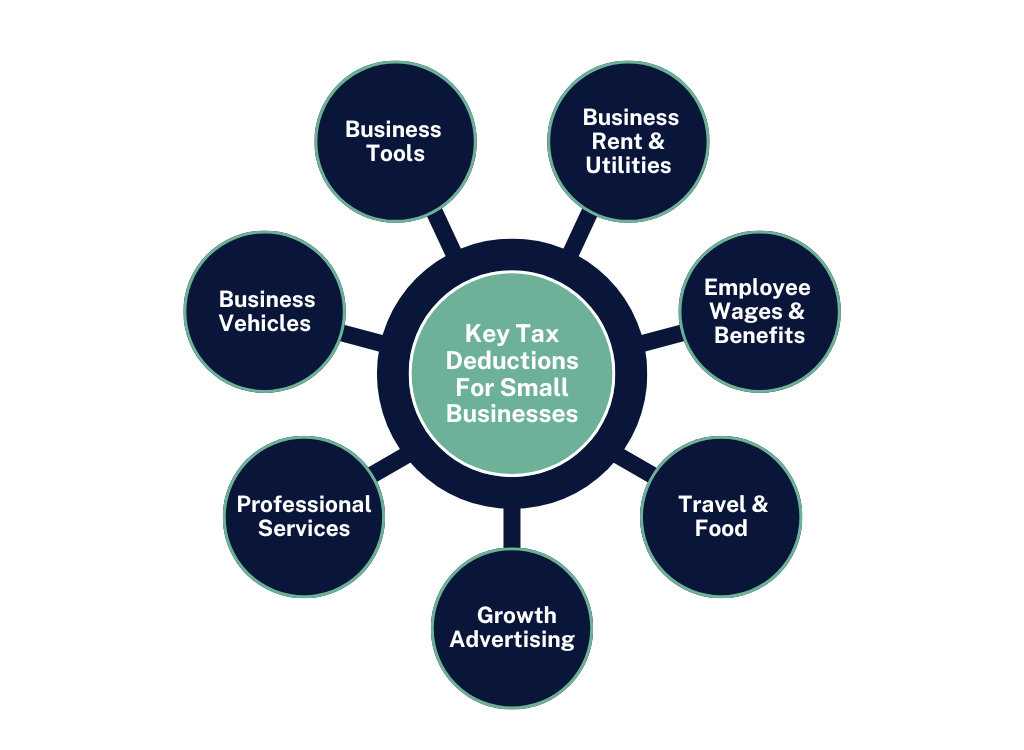
Tax deductions can feel intimidating, but if you have a good understanding of the basics, you can save a good chunk of change. Some standard expenses you can deduct include the following:
1. Business tools
As long as the use of the computer, printer, stationery, or software is fully for business, you can fully deduct the costs associated with the business tools you purchased.
2. Business rent & utilities
Co-working as well as private office spaces are fully deductible. You can also deduct the utilities associated with your office, including your internet and your electricity.
3. Employee wages & benefits
Hiring and retaining employees is a business expense, and so are the healthy expenses associated with your employees. If you cover the costs of your employees’ health insurance or retirement plans, you could get some healthy tax breaks.
4. Travel & food
Flight costs, accommodation expenses, and even the costs associated with meals you buy while out for business are typically deductible. You should have a good record of your receipts.
5. Growth advertising
Marketing & advertising is an expense that you can deduct. The advertising costs you incurred to develop websites, run ads on social media, and run print ads and other advertising campaigns are also deductible.
6. Professional services
If you have an accountant, a business consultant, or a lawyer whom you pay to assist you with your business, you can deduct their fees.
7. Business vehicles
If a vehicle is used for business purposes, you can claim deductions for expenses on the vehicle, fuel, insurance, and maintenance.
Maximizing Deductible Business Expenses
Learning about deductions is only the beginning. To really benefit from deductions, you will need to plan and keep accurate records.
- Make sure to keep personal and business finances separate. Use different accounts to help you keep your deductions organized.
- Document everything. If you really want to help yourself with IRS audits, you will need to keep records.
- Look at depreciation to your advantage. With large purchases like machines or vehicles, you will be able to write off the cost every year for multiple years.
- Make purchases at the end of the year. This will help you lower income for the current tax year while increasing expenses.
Conclusion
Knowing how to work with tax deductions can greatly impact your small business cash flow. Every deductive item is valid, including travel expenses and office supplies. Small business owners can save and stay compliant with all paperwork and spend it on focusing on growing their business by careful record keeping, planning, and tax professional services.
FAQs
Can I deduct home office expenses?
Sure, but only if you use a portion of your home only for business use, and then you can deduct a percentage of your rent, your mortgage interest, utility bills, and other home office maintenance expenses.
Can I deduct business software and subscription services?
For sure. Most subscription services for business software used for billing, Accounting, advertising, business project management, business marketing, etc. can be written off.
How should I track mileage on my business vehicle?
You should keep a mileage log detailing each trip and its purpose. There are also several apps you can use to track your mileage.
Can I deduct meals and entertainment with clients?
50% of the meals you have are likely to be written off if that meal was a business-related meal. Your likely entertainment expenses related to business meals are limited, so keep documents of your entertainment expenses and ask your accountant.
Are travel-related expenses written off?
If you travel for business, then your flight, hotel, taxi, and related incidental expenses like tips are considered necessary for your business and can be written off.
Can I deduct the services of accountants and consultants?
Yes. Legal, business, and financial Services from professionals are also deductible expenses.
How do I know if an expense qualifies as a deduction?
An expense is deductible if it is ordinary (common in your business) and is necessary (helpful for your business operations). If you’re still not sure a business expense is a deductible one, keep records, and talk to a Tax expert.