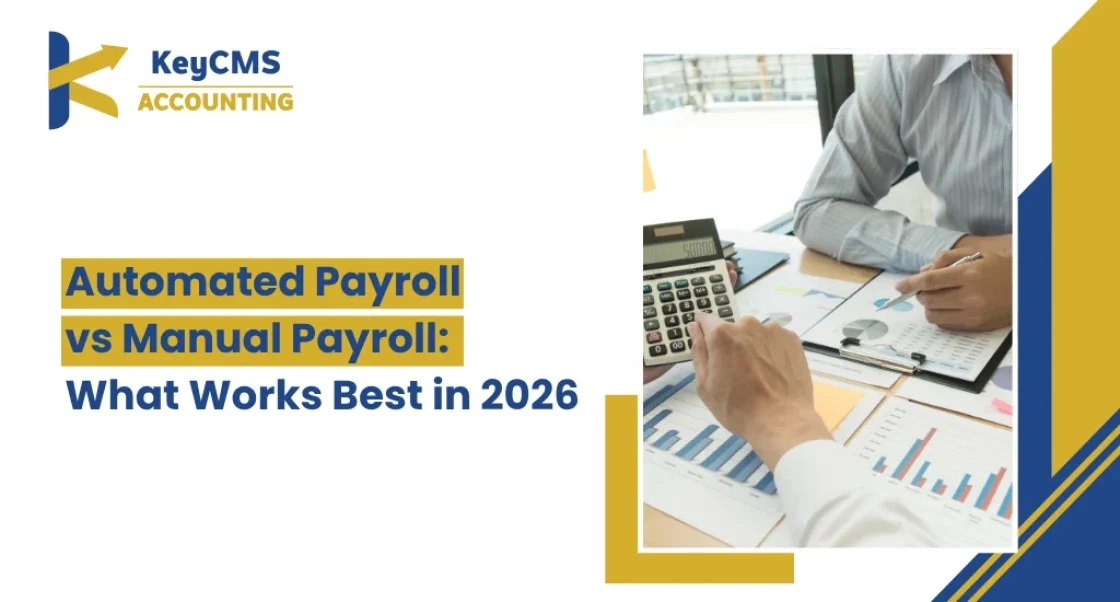
The primary duty of all US businesses requires them to manage employee compensation with complete accuracy while making timely payments to their workers. Companies need to examine their payroll processes because compliance regulations keep changing and employee expectations continue to evolve. The discussion between Automated Payroll and Manual Payroll has reached its peak importance during the year 2026.
This guide provides an analysis of both methods, which includes their benefits and drawbacks, to assist you in choosing the most suitable solution for your organization. The study will examine contemporary payroll systems and current Payroll Processing trends while showing how Payroll Automation is revolutionizing the entire industry.
What is Manual Payroll?
Manual payroll refers to the traditional method of calculating employee wages, taxes, and deductions by hand or using basic tools like spreadsheets.
Key Features:
- Hand-calculated wages and tax deductions
- Use of spreadsheets or paper records
- Direct responsibility on internal staff
- Minimal reliance on external Payroll Service providers
Pros of Manual Payroll:
- Low upfront cost
- Full control over payroll data
- The system works best for businesses that operate with a small workforce.
Cons of Manual Payroll:
- People who handle payroll tasks make mistakes that lead to financial errors.
- The process of managing Payroll requires a significant amount of time to complete.
- Business operations require specialized knowledge to meet IRS and state law obligations.
- The process of expansion becomes difficult for businesses to manage.
In 2026, with increasing tax regulations and reporting requirements, manual payroll is becoming less practical for growing businesses.
What is Automated Payroll?
Automated Payroll uses software or cloud-based Payroll Solutions to manage calculations, tax filings, and employee payments automatically.
Key Features:
- Automated wage calculations and deductions
- Integration with accounting and HR systems
- Real-time compliance updates
- Direct deposit and digital payslips
Pros of Payroll Automation:
- Saves significant time
- Reduces errors in Payroll Processing
- Ensures compliance with U.S. tax laws
- Scalable for growing businesses
- Secure data management
Cons of Payroll Automation:
- Subscription or service costs
- Learning curve for new users
- Dependence on technology
Platforms like KeyCMS Accounting offer streamlined tools that simplify payroll while ensuring compliance and accuracy.
Automated Payroll vs Manual Payroll: Key Differences
| Feature | Manual Payroll | Automated Payroll |
| Accuracy | Prone to errors | Highly accurate |
| Time Efficiency | Slow | Fast |
| Compliance | Difficult | Built-in compliance |
| Cost | Low initial cost | Subscription-based |
| Scalability | Limited | Highly scalable |
| Security | Risky | Advanced security |
When comparing Automated Payroll vs Manual Payroll, the biggest differentiator is efficiency and reliability. Automation significantly reduces administrative burden.
Payroll Trends in the USA for 2026
The Payroll system in the US undergoes rapid changes. Businesses are increasingly adopting digital solutions due to the following:
1. Compliance Complexity
Federal and state tax laws continue to change. The automated systems provide real-time updates to decrease compliance risks.
2. Remote Workforce Growth
Business Payroll Processing needs flexible systems that can handle remote and hybrid work across multiple states.
3. Demand for Real-Time Payments
Employees now expect faster payments and transparent payroll systems.
4. Integration with Financial Systems
Modern Payroll Solutions work with accounting tools to decrease work duplication.
When Should You Choose Manual Payroll?
Manual payroll systems may still be appropriate if:
- You have fewer than 5 employees
- Payroll is relatively simple
- Budget constraints are critical
- You have in-house accounting expertise
Again, however, businesses should think about making the switch as they grow.
When is Payroll Automation the Better Choice?
Payroll automation is best for:
- Small to medium-sized companies that are growing
- Companies that have employees in multiple states
- Companies that are focused on compliance and accuracy
- Companies that want to reduce time and labor involved in the process
Solutions like KeyCMS Accounting offer a range of service capabilities for companies.
Cost Comparison: Manual vs Automated Payroll
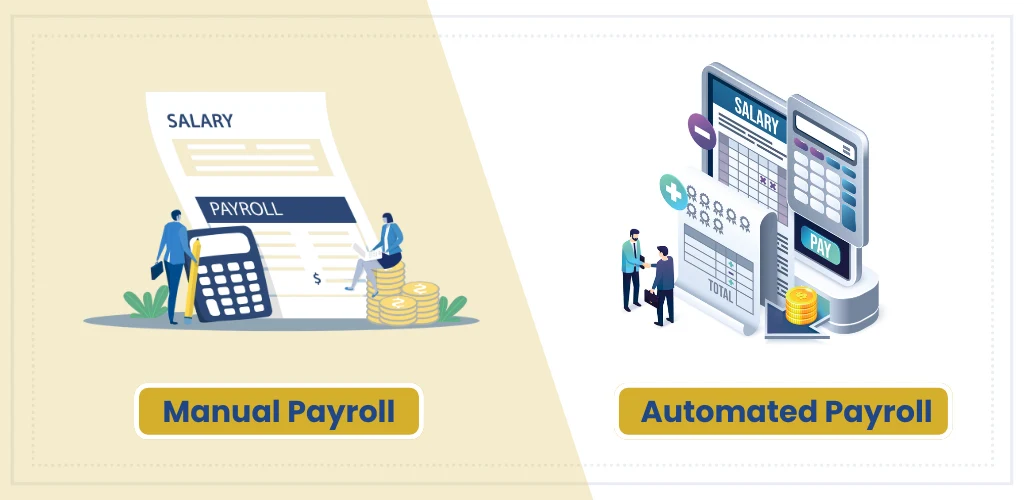
Although the initial costs of manual payroll may be low, the overall costs may add up. The costs of manual payroll are as follows:
Manual Payroll Costs:
- Time spent in calculation
- Chances of penalties in case of mistakes
- Administrative costs
Automated Payroll Costs:
- Subscription charges
- Setup costs
However, in the year 2026, most businesses in the United States will find that the ROI for Automated Payroll is better.
Common Payroll Challenges in 2026
Regardless of the approach taken, several issues arise:
- Tax compliance in all states
- Employee classification: W-2 vs. 1099
- Security concerns
- Regulatory updates
Modern payroll systems greatly reduce the risks and make the process easier.
Why Businesses are Moving Toward Payroll Automation
The shift in the direction of payroll automation is because of the following factors:
- Regulatory pressure
- Desire for operational efficiency
- Digital shift in various sectors
- Desire for precise and timely payroll
Organizations that utilize KeyCMS Accounting have the advantage of streamlining the process.
Conclusion
When comparing automated payroll and manual payroll, it is easy to conclude that:
- Manual payroll is only suitable for very small and simple business structures.
- Automated payroll is the recommended option for scalability, accuracy, and regulatory compliance.
By 2026, business automation is not only desirable; it is imperative for businesses that want to remain competitive and compliant.
FAQs
1. What is the fundamental difference between automated payroll and manual payroll?
The fundamental difference is that automated payroll uses software for calculations, whereas in manual payroll, calculations are done manually.
2. Is manual payroll still used in the USA?
Yes, but only by small businesses. Most businesses in the USA have moved towards automated payroll systems.
3. How does automated payroll increase accuracy?
Automated payroll systems increase accuracy by minimizing human error in calculating salaries, taxes, etc.
4. Are payroll solutions expensive?
No, most Payroll Solutions are not expensive. They are cost-effective in the long run.
5. Can automated payroll systems handle multi-state employees?
Yes, automated payroll systems have been designed in such a manner that they can easily handle multi-state employee tax compliance.
6. What is the risk associated with using manual payroll?
The risk associated with using manual payroll is that it may result in errors, which could be penalized.
7. How do I choose the right payroll service?
While choosing a Payroll Service, there are certain features that need to be looked at.