
The value of a business is determined by how well it is able to keep things like records, finances, and responsibility to stakeholders and, of course, how well it is able to make money. One of the best ways to achieve all of these is by getting an audit. Audits are frightening, confusing, and poorly understood by business owners, which leads them to avoid securing one.
The truth, though, is that Audits are not scary; they are helpful for business growth. This is why we have created this post to explain the why and the how of audits along with the justification of why your business needs an audit.
What is an Audit?
A financial review evaluates a corporation’s financial documents, transactions, and processes. This assessment determines whether the financial statements are accurate, complete, and compliant with applicable laws and Accounting standards.
An audit is performed by an Accounting Firm. The audit is a study of the financial information, internal controls, and related documents. The auditor states, at the conclusion, whether the financial statements holistically represent the financial position of the corporation.
Types of Audits
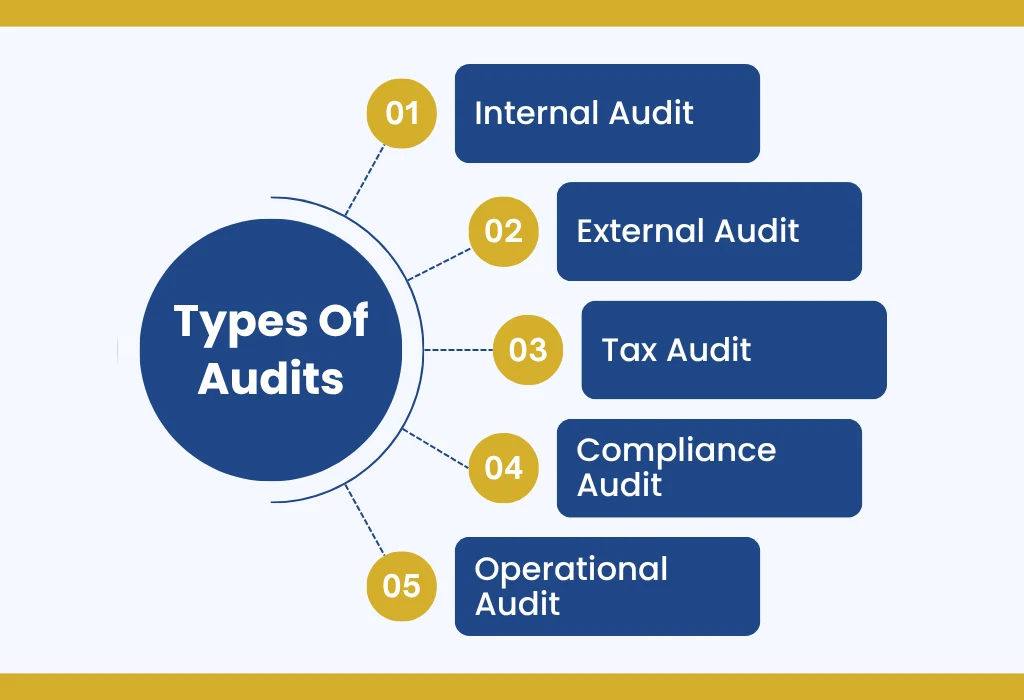
You should consider which audit would best fit your business after dissecting the various kinds of audits.
1. Internal Audit
Internal audits are typically conducted by one’s own team. They are primarily focused on the enhancement of internal procedures, the management of risks, and the overall efficiency of operations.
2. External Audit
These audits are conducted by third parties. They are frequently required by law or various stakeholders and primarily serve the purpose of ensuring financial clarity and trustworthiness.
3. Tax Audit
Tax audits serve to confirm that the business has followed all legal obligations with regard to taxes, including the precise and thorough completion of all tax documentation.
4. Compliance Audit
As the title would suggest, this audit concerns itself with the legal and self-imposed policy adherence of the business.
5. Operational Audit
These audits focus on business and operational systems with the goal of optimizing efficiency and effectiveness.
Why Does Your Business Need an Audit?
An audit isn’t just for large corporations. Every business, including small and medium-sized businesses, can benefit from an audit. Here’s how:
1. Confirms financial statements are accurate
Your financial statements can be made more precise and accurate, while remaining reliable, after an audit. Audits point out any financial discrepancies, mistakes, or omissions.
2. Stakeholder Trust
Having audited financial statements will make investors, lenders, and business partners more likely to trust your company. It reflects your business’s transparency and professionalism.
3. Fraud and Error Prevention
Audits identify and assess accounting and management mistakes, fraud, and any activities that may cause a larger issue before they escalate.
4. Strengthened Internal Controls
Your accounting systems and controls can be enhanced through the suggestions and recommendations made from an auditor’s assessment.
5. Legal and Tax Compliance
Audits can diminish your risk of incurring penalties or legal troubles by ensuring your business is in compliance with all the necessary laws and regulations.
6. Business Growth
An audit will help you plan for business expansion because it presents you with accurate financial data. The data will also support key decision-making and help you attract potential investors.
7. Increased Credibility
Your company will be more likely to establish a partnership or secure the desired funding because audited financial statements are associated with market reputation.
The Audit Process: An Overview
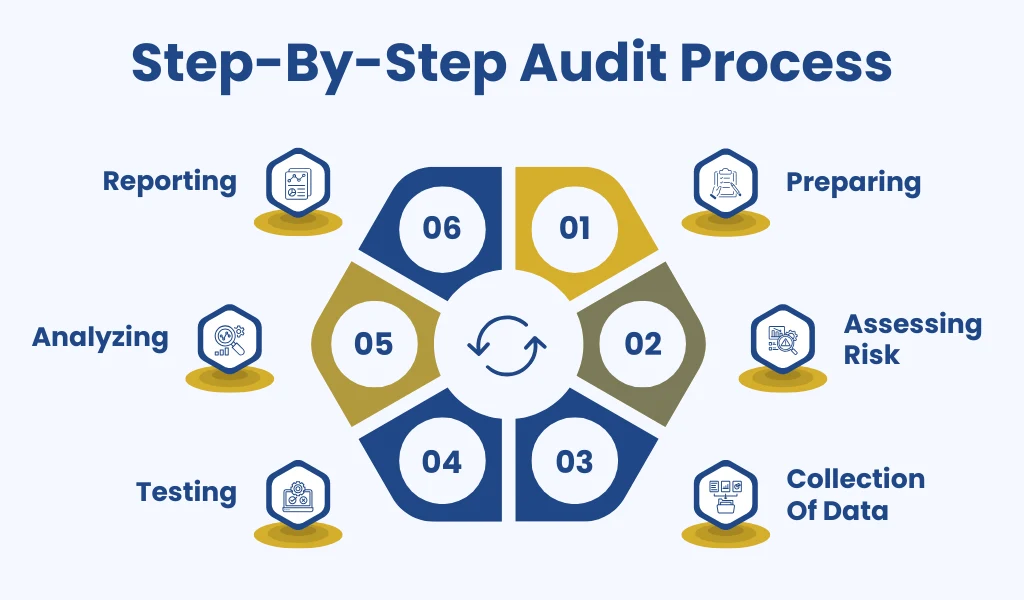
It’s all about perspective. Approaching an audit with an understanding of its mechanics can make it a lot less overwhelming.
Step 1: Preparing
The auditor prepares for the audit by studying your business, its various systems, and the industry as a whole.
Step 2: Assessing risk
The auditor pinpoints the potential areas for errors or for fraud.
Step 3: Collection of data
Scrutiny of records, other documents, bank statements, and invoices ensues.
Step 4: Testing
The auditor verifies the accuracy by testing the internal controls and transactions.
Step 5: Analyzing
The data must be analyzed in compliance with the required standards, and the consistency of the data cross-checked.
Step 6: Reporting
Based on your financial statements, the auditor provides a report with his or her opinion and outlines the findings.
Common Misconceptions About Audits
“Only big companies get audits.”
Small companies get audits too and benefit from them when they are applying for loans or looking for investors.
“An audit is costly.”
While audits do involve expenses, they are far less than the potential losses caused by financial mistakes or non-compliance.
“An audit is a hassle – it takes too much time and causes stress.”
Although audits can be time-intensive and demanding, proper preparation and well-organized records can make the process much smoother.
Signs Your Business May Need an Audit
There is no need to hold off on an audit until the legal requirements are in place. Some reasons to consider an audit are the following:
- Your financial records are not consistent.
- You are considering applying for a loan or an investment.
- Your business is growing quickly.
- You have doubts about the presence of errors or about potential fraudulent activity.
- You do not have adequate internal controls.
- Your tax filings are overwhelming.
How to Prepare for an Audit
An audit can go far more smoothly with sufficient preparation:
- Organize and update financial records.
- Document all transactions for each audit section.
- Complete bank statement reconciliations
- Strengthen internal control systems
- Engage your accountants and bookkeepers.
Conclusion
An audit can really help your business grow beyond the requirements of compliance. It can help establish or reinforce trust between your stakeholders and help improve your efficiency as a business. This strategic tool can help your business at any stage, especially when it comes to analyzing the health of the finances in your business.
It’s incredibly important to approach audits from a place of appreciation and recognition as opposed to viewing it as a task of compliance or viewing it as a business detractor. It will help reinforce your business and eliminate any uncertainty around your finances.
FAQs
1. Why are audits conducted?
The primary function of an Audit is to certify that financial documents are correct and to ensure that these documents are in compliance with laws and accounting standards.
2. Are all businesses required to undergo this process?
Not all businesses are required to do so. It depends on factors like revenue, location, and the structure of the business.
3. How frequently are businesses audited?
The typical time period for a business to be audited is a year, but some businesses do more frequent audits as they see fit.
4. What is a reasonable time frame for an audit?
It can take anywhere from a few weeks to a couple of months. This depends on the size and complexity of the business.
5. Is there any proof that an audit can deter fraud?
Yes. It can aid in fraud prevention by detecting suspicious activities.
6. What documents are required for an audit?
In any audit, some of the documents required are the Financial Statements, invoices, bank statements, tax documents, Payroll, and contracts.
7. What happens if an audit discovers an error?
The auditor will report the mistakes. They will also help to address the issues related to an error.