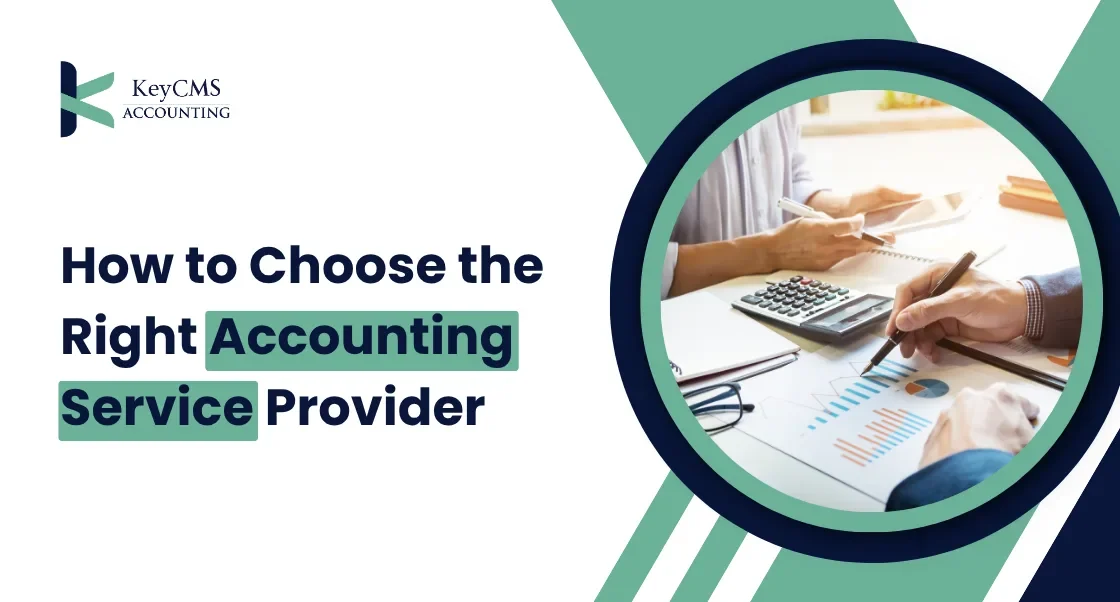
In today’s fast-paced business environment, choosing the right Accounting Service provider is more than just Outsourcing Bookkeeping; it’s about building a strategic partnership that supports your growth, ensures compliance, and protects your financial health.
Whether you’re a startup founder, an established SME, a real estate firm, or an e-commerce brand, your accounting partner plays a critical role in decision-making, tax planning, reporting accuracy, and regulatory compliance. The right provider doesn’t just manage numbers they bring clarity, control, and confidence to your operations.
In this guide, we’ll walk you through the key factors to consider when selecting an Accounting Service provider that truly aligns with your business goals.
Understand Your Business Needs First
Before searching for an Accounting Firm, define what you actually need. Many businesses make the mistake of choosing providers based solely on price without evaluating scope.
Ask yourself:
- Do you need basic Bookkeeping or full-service accounting?
- Are you looking for tax planning and filing support?
- Do you require payroll processing?
- Do you need financial forecasting and reporting?
- Are you expanding internationally?
- Do you want industry-specific expertise?
A startup may need assistance with entity formation and financial structuring, while a growing e-commerce brand may need inventory accounting and multi-state tax compliance. Real estate businesses often require rental income tracking, property accounting, and asset management reporting.
Clearly defining your needs helps you narrow down providers that specialize in the services you require.
Look for Industry Experience
Accounting is not one-size-fits-all. Different industries have different regulations, compliance requirements, and reporting standards.
For example:
- E-commerce businesses need expertise in marketplace reconciliation and sales tax compliance.
- Real estate firms require property-level accounting and lease tracking.
- Service-based businesses may focus heavily on cash flow forecasting.
- Offshore staffing companies must manage international payroll and compliance.
An accounting service provider with industry experience understands the nuances of your business and can proactively guide you through challenges instead of reacting after problems arise.
Ask potential providers:
- Have you worked with businesses like mine?
- Can you share case studies or client references?
- What challenges do you commonly see in my industry?
Evaluate Qualifications and Certifications
Credentials matter. Ensure your accounting provider has qualified professionals such as:
- Certified Public Accountants (CPA)
- Chartered Accountants (CA)
- Certified Management Accountants (CMA)
- Tax specialists
Certifications demonstrate technical expertise and commitment to professional standards. Additionally, verify whether they stay updated with changing tax laws and compliance regulations.
Accounting regulations evolve constantly. Your provider should not only understand current laws but also anticipate changes that may impact your business.
Assess Technology and Software Capabilities
Modern accounting is technology-driven. The right service provider should be comfortable using leading accounting platforms such as:
- QuickBooks
- Xero
- Zoho Books
- NetSuite
- Sage
Beyond software familiarity, ask:
- Do you use cloud-based systems?
- How secure is your data management?
- Can I access real-time financial reports?
- Do you offer automation for invoicing and reconciliation?
Cloud-based accounting offers transparency and accessibility. You should be able to view your financial data anytime, anywhere.
If your business operates in e-commerce, integrations with platforms like Shopify, Amazon, or WooCommerce become crucial. For service-based companies, time-tracking and payroll integrations may be more important.
Technology compatibility ensures smooth collaboration and efficient workflows.
Understand Their Service Model
Accounting providers operate under different engagement models:
- Monthly retainer
- Hourly billing
- Project-based pricing
- Outsourced finance department model
Clarify what is included in the pricing structure. Hidden costs can quickly increase your expenses.
Questions to ask:
- What services are included?
- Are tax filings part of the package?
- How are additional services billed?
- Is there a long-term contract?
Transparency in pricing builds trust. A reliable provider will clearly outline deliverables, timelines, and responsibilities.
Communication and Accessibility
Your accounting service provider should be responsive and proactive.
Poor communication can result in missed deadlines, compliance issues, and financial confusion.
Evaluate:
- How quickly do they respond to queries?
- Will you have a dedicated account manager?
- How often will financial reports be shared?
- Do they provide regular strategy meetings?
A strong accounting partner doesn’t just prepare reports they explain them. They should help you understand your numbers, interpret trends, and make informed decisions.
Compliance and Risk Management Expertise
Compliance errors can lead to penalties, audits, and reputational damage. A competent accounting provider ensures:
- Accurate tax filings
- Proper documentation
- Regulatory compliance
- Audit readiness
- Internal financial controls
They should implement systems that reduce risk and prevent fraud.
If you operate in multiple states or countries, confirm that the provider understands cross-border compliance and international taxation rules.
Scalability and Growth Support
Your accounting needs will evolve as your business grows.
Choose a provider who can scale with you.
For example:
- Can they handle higher transaction volumes?
- Do they offer CFO advisory services?
- Can they assist with investor reporting?
- Do they support mergers and acquisitions?
A scalable partner eliminates the need to switch firms as your business expands.
Look for providers who offer strategic financial planning not just Transactional Bookkeeping.
Data Security and Confidentiality
Accounting firms handle sensitive financial information. Ensure they follow strict data security protocols:
- Encrypted data storage
- Secure cloud platforms
- Limited access controls
- Non-disclosure agreements (NDAs)
Cybersecurity threats are increasing globally. Your financial data must be protected with enterprise-level safeguards.
Reputation and Client Reviews
Before finalizing a provider, research their reputation.
Check:
- Online reviews
- Client testimonials
- Google ratings
- LinkedIn recommendations
- Industry references
Consistency in positive feedback indicates reliability and professionalism.
Don’t hesitate to request references. Speaking with existing clients can give you real insights into the provider’s service quality and responsiveness.
Cultural Fit and Business Alignment
An often overlooked factor is cultural compatibility.
Your accounting provider should understand your business vision and values. Whether you’re innovation-driven, growth-focused, or cost-conscious, alignment matters.
A provider who treats your business like a partner rather than a transaction will deliver greater long-term value.
Red Flags to Watch Out For
Be cautious if you notice:
- Unclear pricing structures
- Delayed responses
- Lack of transparency
- No formal agreement or contract
- Outdated software practices
- Overpromising unrealistic tax savings
Choosing the wrong accounting partner can cost far more than the service fee itself.
Conclusion
Selecting the right Accounting Service provider is a strategic decision not an administrative one.
The ideal partner should:
- Understand your industry
- Offer scalable solutions
- Use modern technology
- Ensure compliance
- Provide proactive financial insights
- Communicate clearly and consistently
When you choose wisely, your accounting provider becomes an extension of your business helping you minimize risk, optimize tax strategies, improve cash flow, and confidently plan for the future.
Invest time in research, ask the right questions, and prioritize long-term value over short-term savings. With the right financial partner by your side, you’ll not only maintain clean books but build a stronger, smarter, and more profitable business.
FAQs
1. Why is choosing the right accounting service provider important for my business?
Selecting the right accounting service provider ensures accurate financial reporting, regulatory compliance, tax optimization, and better cash flow management. A reliable partner not only maintains your books but also provides strategic insights that support business growth and informed decision-making.
2. What services should I expect from a professional accounting firm?
A professional accounting firm typically offers bookkeeping, financial reporting, tax planning and filing, Payroll Processing, compliance management, and advisory services. Some firms also provide CFO-level guidance, forecasting, budgeting, and industry-specific accounting solutions.
3. How do I know if an accounting provider has experience in my industry?
You can evaluate industry experience by reviewing case studies, client testimonials, and asking direct questions about similar businesses they have worked with. A provider familiar with your sector will understand specific compliance requirements, reporting standards, and financial challenges unique to your industry.
4. What qualifications should I look for in an accounting service provider?
Look for certified professionals such as CPAs (Certified Public Accountants), CAs (Chartered Accountants), or CMAs (Certified Management Accountants). These certifications indicate technical expertise, regulatory knowledge, and adherence to professional standards.
5. Should I choose a local accounting firm or an outsourced accounting service?
Both options have advantages. A local firm may offer in-person support, while Outsourced Accounting Services often provide cost-effective, scalable solutions with access to advanced technology and specialized expertise. The right choice depends on your business size, budget, and operational needs.
6. How important is accounting software and technology when choosing a provider?
Technology is crucial. A modern accounting provider should use secure, cloud-based Software that allows real-time reporting, automation, and easy data access. Compatibility with platforms like QuickBooks, Xero, or other business systems ensures seamless operations and improved efficiency.
7. How can I evaluate the pricing structure of an accounting service provider?
Ask for a clear breakdown of services included in the pricing. Understand whether the model is monthly, hourly, or project-based, and confirm if there are additional charges for tax filing, compliance, or advisory services. Transparent pricing helps avoid hidden costs and ensures better financial planning.