The most important thing to keep in mind to avoid stress during tax season is that error-proof tax filing is a direct result of error-proof tax filing is a direct result of. When the books are accurate, the tax prep is more efficient.
We have put together a guide outlining some tax prep challenges business owners may face, answers to some of the more common questions, and steps that can be taken to build an error-free bookkeeping system that leads to stress-free tax prep.
What Is Bookkeeping and Why Is It Important for Tax Preparation?
Bookkeeping includes keeping track of all of the financial transactions of a business like income, expenses, invoices, payroll, etc. and organizing and recording them.
From a tax perspective, bookkeeping is important because it:
- Makes tax calculations more accurate
- Reduces the chances of an audit
- Assists in claiming all deductions available
- Saves time during tax season
- Helps make better financial decisions.
Without proper Bookkeeping, the preparation of tax is chaotic, time consuming and error prone.
12 Essential Bookkeeping Tips for Hassle-Free Tax Preparation
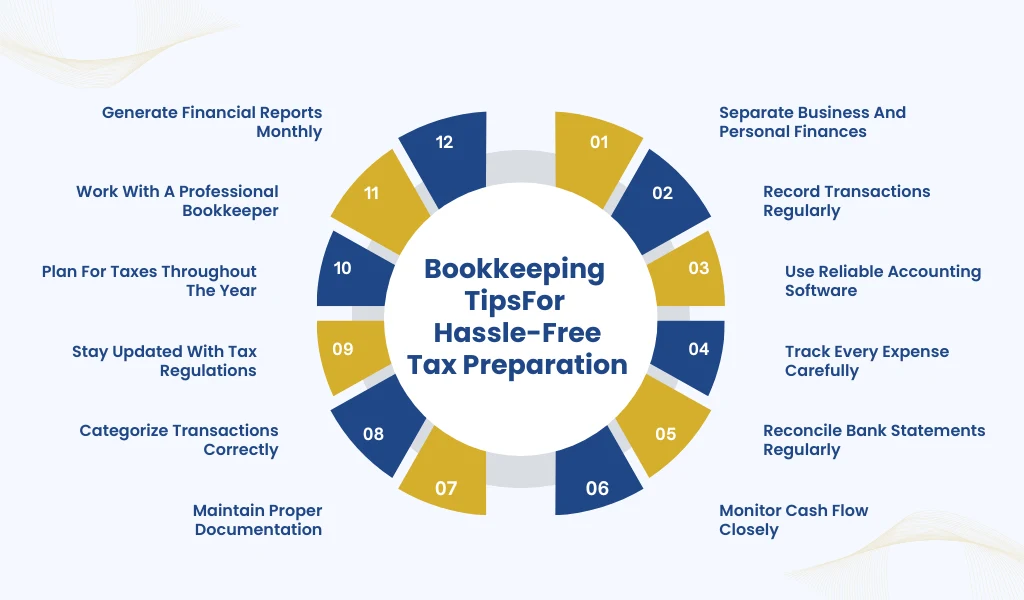
1. Separate Business and Personal Finances
One of the most common mistakes business owners make is mixing personal and business transactions.
Why this matters:
- Simplifies tracking expenses
- Ensures compliance with tax regulations
- Makes audits easier to handle
Pro Tip:
Open a dedicated business bank account and credit card. This simple step can save hours of sorting transactions later.
2. Record Transactions Regularly
Waiting until the end of the month or worse, the end of the year to record transactions can lead to missing or inaccurate data.
Best practice:
- Update records daily or weekly
- Track income, expenses, and receipts consistently
Benefits:
- Real-time financial visibility
- Fewer errors
- Easier reconciliation
Consistency is key to stress-free tax preparation.
3. Use Reliable Accounting Software
Manual bookkeeping is not only time-consuming but also increases the risk of errors. Modern Accounting Software simplifies everything.
What to look for:
- Automation features
- Bank integration
- Expense tracking
- Tax-ready reports
Popular tools include:
- QuickBooks Online
- Xero
- Zoho Books
These tools help generate accurate financial reports needed for tax filing.
4. Track Every Expense Carefully
Missing out on expenses means missing out on Tax Deductions.
Common deductible expenses:
- Office supplies
- Travel expenses
- Software subscriptions
- Utilities
- Professional services
Tip:
Keep digital copies of all receipts and categorize expenses properly.
5. Reconcile Bank Statements Regularly
Bank reconciliation ensures your bookkeeping records match your bank statements.
How often should you reconcile?
- Ideally monthly
Why it’s important:
- Detects errors or fraud
- Keeps financial records accurate
- Prevents discrepancies during tax filing
Regular reconciliation keeps your books clean and audit-ready.
6. Monitor Cash Flow Closely
Understanding your cash flow helps you stay financially stable and prepared for tax payments.
Key actions:
- Track incoming and outgoing cash
- Identify patterns and trends
- Plan for tax liabilities
Benefit:
You won’t be caught off guard when it’s time to pay taxes.
7. Maintain Proper Documentation
The IRS and other tax authorities require proper documentation for every claim you make.
Documents to keep:
- Invoices
- Receipts
- Bank statements
- Payroll records
- Tax filings
Storage tips:
- Use cloud-based storage
- Organize files by category and date
Good documentation ensures smooth audits and accurate tax filing.
8. Categorize Transactions Correctly
Incorrect categorization can lead to inaccurate financial statements and tax errors.
Examples:
- Advertising vs. marketing expenses
- Office supplies vs. equipment
- Travel vs. meals
Tip:
Create a clear chart of accounts and stick to it.
9. Stay Updated with Tax Regulations
Tax laws change frequently, and staying informed is crucial.
Why it matters:
- Avoid penalties
- Maximize deductions
- Ensure compliance
Best approach:
- Work with a professional accountant
- Follow updates from tax authorities
10. Plan for Taxes Throughout the Year
Don’t wait until tax season to think about taxes.
Smart strategies:
- Set aside a portion of income for taxes
- Estimate quarterly tax payments
- Review financials regularly
Result:
No last-minute surprises or financial stress.
11. Work with a Professional Bookkeeper
Even with the best tools, managing books can be overwhelming especially for growing businesses.
Benefits of outsourcing bookkeeping:
- Saves time
- Improves accuracy
- Ensures compliance
- Provides expert insights
Outsourcing to professionals like KeyCMS Accounting can streamline your entire financial process.
12. Generate Financial Reports Monthly
Financial reports provide insight into your business.
Key reports:
- Profit and loss statement
- Balance sheet
- Cash flow statement
Value:
- Aid in tax reporting
- Assist in business planning
- Provide financial clarity
How Do These Tips Help in Hassle-Free Tax Preparation?
Following these bookkeeping guidelines:
- Your records stay organized.
- Your taxes become easier to calculate.
- Your mistakes and fines are minimized.
- Your filing is quick and efficient.
In other words, bookkeeping makes tax season stress-free.
Conclusion
Tax preparedness done with no stress isn’t about the extra effort spent during tax season. It is about the effort spent throughout the year. You can remain organized and compliant and have less stress come tax filing time with the help of these bookkeeping tips.
Implementing and investing in good Bookkeeping practices can be one of the best decisions a small business owner can make. This can also be applied to a CPA firm, especially if bookkeeping practices are outsourced.
FAQs
1. How often should I update my bookkeeping records?
You should update your records daily or weekly to ensure accuracy and avoid last-minute stress.
2. What is the best bookkeeping method for small businesses?
Most small businesses prefer cloud-based accounting software due to automation, ease of use, and real-time tracking.
3. Why is bank reconciliation important for taxes?
It ensures your records match your bank statements, reducing errors and making tax filing more accurate.
4. Can I do bookkeeping myself, or should I outsource it?
You can manage it yourself initially, but outsourcing to professionals ensures accuracy, compliance, and saves time.
5. What records should I keep for tax preparation?
Keep invoices, receipts, bank statements, Payroll records, and previous tax filings.
6. How can bookkeeping help reduce tax liability?
Proper bookkeeping helps identify all deductible expenses, ensuring you don’t overpay taxes.
7. What happens if my bookkeeping is inaccurate?
Inaccurate bookkeeping can lead to incorrect tax filings, penalties, audits, and financial mismanagement.